

Scott Fcasni
An outside-the-waistband (OWB) holster prints when the shape of the gun or holster pushes outward against your clothing.
Carrying a firearm with an OWB (Outside-the-Waistband) holster can provide excellent comfort, quick access, and better airflow compared with many inside-the-waistband setups. However, one common frustration among concealed carriers is printing the visible outline of a handgun showing through clothing. If your OWB concealed carry holster is printing, the problem is usually not caused by one single factor. The holster design, firearm size, gun belt, carry position, holster cant, ride height, and cover garment all work together to determine how well your firearm stays concealed. The right solution usually comes from improving your complete concealed carry setup by choosing a low-profile OWB holster, using a quality gun belt, adjusting your carry position, and selecting clothing that supports concealment.
Understanding why printing happens helps firearm owners make better decisions about their everyday carry (EDC) setup. A properly fitted OWB concealed carry holster should keep the handgun secure, maintain a consistent position, and reduce unnecessary movement while allowing a smooth draw when needed. Whether you carry a compact handgun or a larger pistol from brands such as Glock, Smith & Wesson, or Sig Sauer, the goal is creating a balanced setup that works with your body, lifestyle, and daily clothing choices.
What Is OWB Holster Printing?
OWB holster printing happens when the shape of a concealed firearm becomes noticeable through your clothing. Instead of remaining hidden under a cover garment, the outline of the handgun creates visible signs such as a noticeable grip shape, raised edges, or a bulge around the waist area. Printing does not always mean your firearm is completely visible, but it can indicate that your concealed carry setup needs adjustment.
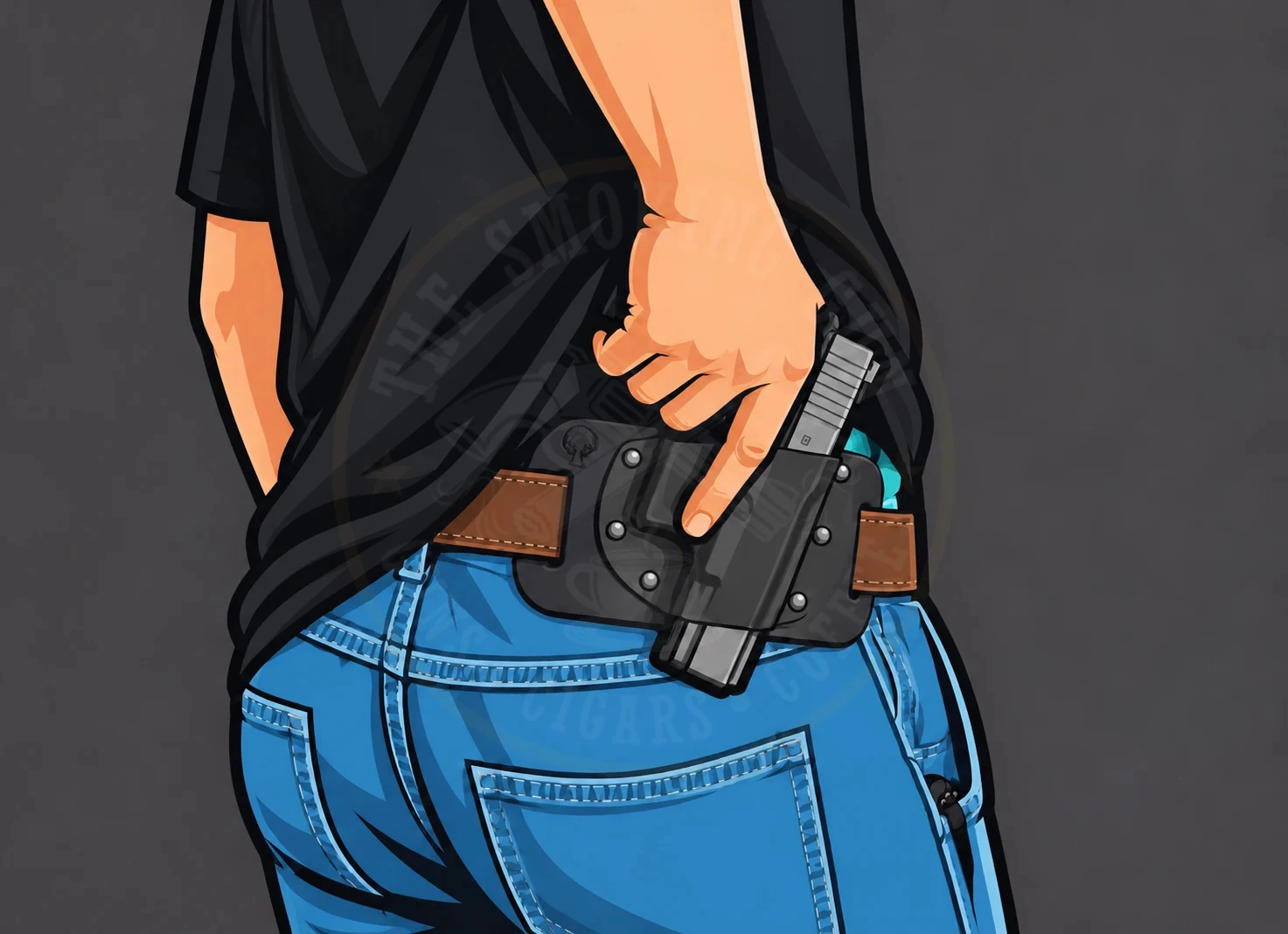
Unlike open carry, where the firearm is intentionally visible, concealed carry focuses on keeping the firearm discreet while maintaining accessibility and safety. OWB holsters sit outside the waistband, which makes them comfortable for many users, but this position also creates a greater need for proper equipment selection. A poorly fitted OWB holster, weak belt, or unsuitable clothing can allow the firearm to move away from the body and increase printing.
For many new carriers, printing is one of the first issues they notice after purchasing a concealed carry holster. The good news is that most printing problems can be improved through simple adjustments rather than completely changing your firearm or carry method.
How Firearm Printing Happens During Concealed Carry
Firearm printing occurs when parts of the handgun create pressure against the cover garment and reveal the shape underneath. The most common area where printing happens is the handgun grip because it extends outward from the body and can create a visible outline through shirts or jackets.
Several factors can contribute to firearm printing:
- The handgun grip pushes outward from the body
- The OWB holster holds the firearm too far away from the waist
- The gun belt allows the holster to tilt or move
- The clothing fabric is too thin or tight
- The carry position does not match your body shape
The firearm grip is often the biggest challenge because it creates leverage against the body. Even a slim handgun can print if the holster angle, ride height, or belt support is incorrect. This is why choosing an OWB concealed carry holster that keeps the firearm close to the body is important for better concealment.
A quality concealed carry holster should provide proper retention, stable positioning, and consistent placement throughout daily activities. Walking, sitting, bending, and reaching can all change how a firearm sits under clothing, so the entire setup needs to work together.
Printing vs Proper Concealment: Understanding the Difference
Many concealed carriers worry that any visible outline means their setup has failed. In reality, there is a difference between minor outline visibility and obvious firearm printing. Clothing naturally follows the shape of objects underneath, and complete invisibility is not always realistic with every firearm, body type, and clothing style.
Proper concealment means the firearm does not attract unnecessary attention and remains safely covered during normal daily activities. A slight shape under a shirt may not be noticeable to others, but a clear handgun outline, exposed grip, or repeated clothing adjustment can indicate a problem.
Experienced concealed carriers usually evaluate their setup by asking:
| Check | What to Evaluate |
| Standing position | Is the handgun outline noticeable? |
| Sitting position | Does the firearm shift or push outward? |
| Movement | Does bending or reaching reveal the firearm? |
| Clothing | Does the cover garment naturally hide the shape? |
| Comfort | Can you carry confidently without constant adjustment? |
The goal of concealed carry is a reliable system where the firearm stays secure, accessible, and discreet throughout normal activities.
Common Causes of OWB Printing
An OWB concealed carry holster can print because of several connected issues. Many people immediately blame the holster, but printing often comes from the relationship between the holster, belt, firearm, clothing, and body position. Identifying the exact cause makes it easier to fix the problem without replacing unnecessary equipment.
Your OWB Holster Design Keeps the Firearm Too Far From Your Body
One of the most common reasons for OWB holster printing is excessive space between the handgun and the body. Since an OWB holster sits outside the waistband, the firearm naturally has more separation compared with an IWB holster. If the holster design adds additional distance, the grip can rotate outward and become easier to see.
Low-profile OWB holsters are created to reduce this issue by keeping the handgun closer to the natural curve of the body. Designs such as pancake holsters are popular among concealed carriers because they spread the firearm position across the belt line and help reduce outward movement.
A bulky paddle holster or poorly positioned belt attachment can increase the distance between the firearm and your body. While paddle holsters can provide convenience and easy removal, the overall design must still maintain a stable carry position.
Important OWB holster features for reducing printing include:
- Slim profile construction
- Proper firearm molding
- Secure retention system
- Strong belt attachment
- Adjustable cant options
- Comfortable ride height
The best OWB holster for concealed carry is not always the largest or most protective option. For everyday carry, many users prefer a balance between security, comfort, accessibility, and concealment.
A Weak Gun Belt Allows Your Holster to Move
A gun belt is one of the most important parts of an OWB concealed carry setup. Many printing problems happen because a standard everyday belt cannot properly support the weight of a handgun and holster. A weak belt may bend, twist, or sag under firearm weight. This movement allows the OWB holster to tilt outward, creating a larger gap between the handgun and the body. Even a high-quality holster can perform poorly if it is attached to a belt that cannot maintain its position.
A proper concealed carry gun belt should provide:
| Feature | Benefit |
| Stiff construction | Supports firearm weight |
| Proper thickness | Keeps holster stable |
| Reinforced material | Reduces sagging |
| Secure buckle system | Maintains belt position |
Leather gun belts, nylon reinforced belts, and purpose-built EDC belts are commonly used because they provide better support than regular fashion belts.
For OWB carry, the belt is the foundation that keeps the entire system working correctly. A stable belt helps maintain holster cant, ride height, and firearm positioning throughout the day.
Incorrect Holster Cant Changes How the Handgun Sits
Holster cant refers to the angle at which the handgun sits inside the holster. This adjustment plays an important role in concealed carry because it affects the position of the firearm grip, draw angle, and how closely the handgun follows the natural shape of your body.
Many OWB concealed carry holsters allow users to adjust the cant depending on their preferred carry position. A forward cant can help rotate the handgun grip slightly toward the body, reducing the chance of the grip creating a visible outline under clothing. On the other hand, an incorrect cant angle can push the grip outward and increase firearm printing.
For example, a straight-drop OWB holster carried on the hip may work well for some users, but others may experience more printing because the handgun grip remains in a more vertical position. Adjusting the holster cant can help improve concealment without changing the firearm itself.
Common cant options include:
| Cant Style | Description | Effect on Concealment |
| Neutral Cant | Firearm sits vertically | Works well for some strong-side positions |
| Forward Cant | Grip angles slightly forward | Helps reduce grip printing |
| Negative Cant | Grip angles backward | Usually used for specific carry styles |
A proper holster cant should provide a balance between concealment and accessibility. The firearm should remain easy to draw while staying close to the body during normal movement.
Wrong Ride Height Can Increase Printing
Ride height determines how high or low the handgun sits in relation to the waistband. This adjustment affects both concealment and draw performance. A firearm that sits too high can create more visible grip exposure, while a firearm positioned too low may become difficult to access.
Many concealed carriers focus heavily on the holster itself but overlook ride height adjustments. However, even a high-quality OWB concealed carry holster may print if the ride height does not match the user’s body shape and clothing style.
A higher ride height may cause:
- More handgun grip visibility
- Increased outward pressure against clothing
- Less natural body alignment
A lower ride height may cause:
- Reduced accessibility
- Difficult grip establishment during the draw
- Less comfort while sitting
The ideal ride height depends on several factors:
- Firearm size
- Body type
- Carry position
- Clothing choices
- Daily activities
The goal is to find a position where the handgun remains secure, accessible, and naturally covered by your clothing.
Your Handgun Size May Be Creating Concealment Challenges
The size and shape of your firearm can significantly affect concealment. Larger handguns often create more challenges because they have longer grips, heavier frames, and larger overall profiles. The handgun grip is usually the main area responsible for printing because it creates the most outward pressure against clothing. A full-size handgun may require more attention to holster selection, belt quality, and clothing compared with a compact or subcompact model.
For example:
| Firearm Size | Concealment Consideration |
| Full-size handgun | Larger grip may require better positioning |
| Compact handgun | Easier balance between comfort and concealment |
| Subcompact handgun | Smaller profile with fewer printing concerns |
Popular handgun platforms from brands such as Glock, Smith & Wesson, and Sig Sauer are available in multiple sizes, allowing carriers to choose a firearm that matches their needs. However, firearm size alone does not determine concealment success. A properly fitted OWB holster, strong gun belt, and correct carry position can significantly improve concealment even with larger handguns.
Clothing Choices Can Reveal Your OWB Carry Setup
Your clothing is an important part of your concealed carry system. Even the best low-profile OWB holster can print if the cover garment does not provide enough space or structure to hide the firearm outline. Many printing problems happen because clothing pulls tightly against the handgun. Stretch materials and lightweight shirts often reveal edges and shapes more easily because they follow the exact outline of objects underneath.
Clothing choices that may increase printing include:
- Tight-fitting shirts
- Thin athletic fabrics
- Lightweight stretch materials
- Short shirts that expose the handgun grip area
Better options for OWB concealed carry include:
- Button-down shirts
- Overshirts
- Flannel shirts
- Jackets
- Vests
- Layered clothing
Patterned fabrics can also help reduce visible outlines because they break up the shape of the firearm under the fabric. A plaid shirt or textured material often hides minor outlines better than a plain, tight shirt.
The right cover garment should allow comfortable movement while maintaining enough space between the fabric and the handgun.
How to Stop OWB Holster Printing and Improve Concealment
Fixing OWB holster printing usually requires improving the entire carry system rather than changing only one component. A concealed carry setup works best when the holster, firearm, belt, clothing, and carry position support each other.
Choose a Low Profile OWB Holster Designed for Concealment
A low-profile OWB holster is one of the most effective solutions for reducing printing. These holsters are designed to keep the firearm closer to the body while maintaining proper retention and accessibility.
A concealment-focused OWB holster should provide:
- Secure firearm retention
- Minimal unnecessary material
- Proper handgun fit
- Stable belt attachment
- Adjustable cant options
- Comfortable everyday positioning
Pancake holsters are especially popular for concealed carry because their wider design helps distribute the firearm closer along the waistline. Instead of allowing the handgun to sit away from the body, the holster shape helps maintain a flatter profile. Kydex holsters are also commonly used because they provide consistent retention, durability, and a slim construction. Leather holsters remain popular among many carriers because of their comfort and traditional feel.
When choosing an OWB concealed carry holster, consider:
| Feature | Why It Matters |
| Low profile design | Reduces outward firearm movement |
| Adjustable retention | Keeps firearm secure |
| Adjustable cant | Helps improve concealment |
| Proper belt attachment | Maintains stable positioning |
A quality holster should match the firearm model and the user’s preferred carry style rather than simply being selected based on appearance.
Upgrade to a Proper Gun Belt for OWB Carry
A firearm and holster combination places more stress on a belt than normal everyday items. A proper gun belt helps maintain the position of the OWB holster and prevents the handgun from shifting during daily movement. Many concealed carriers notice improvement simply by upgrading from a regular belt to a reinforced gun belt.
A good OWB gun belt helps:
- Keep the holster upright
- Prevent sagging
- Reduce firearm movement
- Maintain consistent draw position
Common materials include:
- Leather gun belts
- Nylon reinforced belts
- Polymer-supported EDC belts
The belt should provide enough stiffness to support the firearm while still remaining comfortable for daily wear.
Adjust Your Carry Position for Better Concealment
Carry position affects how the handgun follows the body’s natural shape. A position that works well for one person may create printing problems for another because body shape, clothing style, and daily movement vary.
3 O’Clock Carry Position
The 3 o’clock position places the firearm directly on the strong-side hip. This is a common OWB carry position because it provides quick access and a natural draw motion.
However, some users experience more printing because the handgun grip may extend outward from the hip.
4 O’Clock Carry Position
The 4 o’clock position places the handgun slightly behind the hip. Many carriers prefer this position because it can follow the curve of the body more naturally.
Benefits include:
- Reduced grip visibility
- Comfortable long-term carry
- Better concealment for many body types
Behind-the-Hip Carry
Behind-the-hip positions can improve concealment for some users because the firearm sits closer to areas where clothing naturally falls.
However, every carrier should test different positions to find the balance between:
- Comfort
- Accessibility
- Concealment
- Safe draw practice
Use Clothing That Supports OWB Concealed Carry
Clothing plays a major role in how well an OWB concealed carry holster performs. A firearm that remains hidden while standing may become noticeable when sitting, bending, or reaching if the cover garment does not provide enough room or structure. The goal is not to wear oversized clothing that looks unnatural. Instead, choose garments that create enough space around the handgun while allowing normal movement. The best concealed carry clothing works with the firearm position rather than fighting against it.
For warmer weather, many carriers prefer:
- Lightweight button-down shirts
- Patterned overshirts
- Cotton fabrics
- Relaxed-fit shirts
- Breathable cover garments
During colder months, additional layers can make OWB concealment easier:
- Jackets
- Hoodies
- Vests
- Flannel shirts
- Layered outerwear
Patterns such as plaid, textured fabrics, and darker colors can help reduce attention to minor firearm outlines. However, clothing should always allow safe access to the firearm without creating unnecessary obstacles. A proper concealed carry setup considers both the equipment and the environment. The same OWB holster may conceal differently depending on whether you are wearing a thin summer shirt or a heavier winter jacket.
What Features Make an OWB Holster Better for Concealment?
Choosing the right OWB concealed carry holster requires understanding which features actually improve concealment. A holster should keep the firearm secure, maintain a consistent position, and reduce unnecessary movement during daily activities.
A concealment-focused OWB holster is usually built around four important areas:
| Feature | Purpose |
| Low profile design | Keeps firearm closer to the body |
| Proper retention | Prevents unwanted firearm movement |
| Adjustable cant | Helps control grip position |
| Strong belt attachment | Maintains stable placement |
The right combination of these features can significantly reduce printing issues.
OWB vs IWB: Which Provides Better Concealment?
The choice between an OWB holster and an IWB holster depends on personal preference, clothing style, firearm size, and daily routine. Both carry methods can work well when properly configured.
OWB Holster Advantages
OWB holsters are popular because they provide:
- Greater comfort
- Easier firearm access
- Better airflow
- Less direct contact between firearm and body
- Support for larger handguns
Many carriers prefer OWB for long periods because the firearm does not press directly against the body.
The challenge is that OWB requires more attention to clothing and equipment because the firearm sits outside the waistband.
IWB Holster Advantages
IWB (Inside-the-Waistband) holsters place the firearm inside the waistband, which usually brings the handgun closer to the body.
Benefits include:
- Easier concealment under lighter clothing
- Reduced firearm exposure
- Smaller overall profile
However, some users find IWB less comfortable because the firearm sits closer against the body. Appendix carry (AIWB) is another IWB method that places the firearm near the front of the waistband. It can provide excellent concealment for some users, but comfort and personal fit vary.
Final Thoughts: Fixing OWB Holster Printing Requires the Right Setup
OWB holster printing is usually the result of several small issues working together. The firearm, holster, belt, clothing, and carry position all influence how well your setup stays concealed. A comfortable and effective OWB concealed carry system usually includes:
- A low-profile OWB concealed carry holster
- A supportive gun belt
- Proper holster cant and ride height
- A suitable carry position
- Clothing that supports concealment
- Regular testing and adjustment
For firearm owners looking for a better everyday carry setup, choosing equipment that matches your handgun and lifestyle is the key step. At Smoking Gun Store, customers can find firearm accessories and concealed carry solutions with guidance based on practical carry needs, comfort, and reliable performance. A well-built concealed carry setup allows you to carry confidently while staying compliant with local gun laws and practicing responsible firearm ownership.