

Scott Fcasni
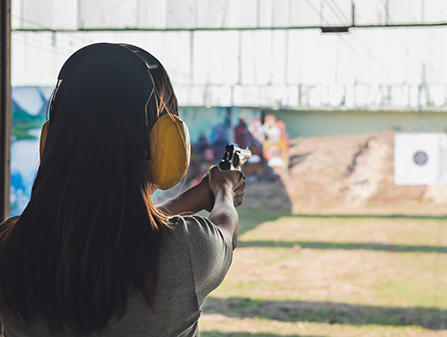
Walking into a shooting range for the first time can make you feel exposed if you do not know the unwritten social habits that keep everyone safe. Many people spend hours learning how to load magazines or line up their iron sights, but they completely forget to look at how to act around other shooters on the live deck. Range etiquette is the solution to this problem because it provides a clear set of behavioral guidelines that prevent arguments, handle crowds, and stop accidents before they can start. When you step onto a firing line, your personal actions directly impact the safety, comfort, and concentration of every single person standing to your left and right.
There is a huge difference between being a highly skilled marksman and being a safe, courteous neighbor. You might be able to punch a single ragged hole into a target at twenty-five yards, but if you swing your firearm around carelessly while unpacking, you are an unsafe shooter. The people sharing the line with you cannot see your past training or know your experience level, so they judge your reliability by how you carry yourself inside your lane. Following these social and structural boundaries builds immediate trust with the staff and surrounding shooters, turning a tense environment into a relaxed, productive practice session.
To ensure you start your next live-fire session with total confidence, use this quick checklist of non-negotiable line behaviors the absolute second you cross the staging threshold:
- Keep Guns Cased: Never remove a firearm from its carrying case or sleeve until you are fully inside your assigned shooting booth facing downrange.
- Verify Chamber Conditions: Every time you pick up or set down a firearm, immediately open the action to confirm that the chamber and magazine well are completely empty.
- Observe Stall Boundaries: Keep your body, your gear, and your spent shell casings contained entirely within your own physical lane divider.
- Do Not Touch Guns During Breaks: The moment a freeze is called, immediately step away from your bench and do not lay a finger on any weapon until the line is active again.
The Golden Rules of Firing Line Awareness (The 180-Degree Boundary)
The 180-degree rule is an invisible geometric boundary that cuts directly across the firing line, running perfectly parallel to the back wall behind you. When you are standing inside your shooting stall, your firearm’s muzzle must point straight downrange toward the impact berm and must never swing past this imaginary flat plane. This rule is most frequently broken by accident when people are unpacking their range bags, fixing a malfunction, or putting a handgun back into a soft case. If you turn your body sideways to talk to a friend while holding a pistol, or if you lift a rifle up to look at the optics and point the barrel toward the side wall, you have broken the 180-degree boundary. Breaking this plane means your muzzle has pointed at a neighbor, which will result in an immediate safety correction or expulsion from the property by the staff.
The Mechanics of Safe Benching
Benching a firearm means placing it down on the shooting table during a break or while you wait for your target to move. You cannot just drop a loaded gun onto the bench or rest it on its side with the action closed. To bench a weapon safely, you must first drop the magazine, pull the slide or bolt completely to the rear, lock it open, and look directly into the chamber to ensure no live rounds are present. Once empty, place the firearm flat on the table surface with the open ejection port facing upward so that anyone standing near your lane can see the empty chamber at a glance. The barrel must point directly down toward the backstop, and the trigger guard must remain completely clear of any loose cleaning rods, ammo boxes, or tools resting on the table.
Handling the Hot Brass Panic
One of the most intense tests of range etiquette happens when a piece of piping-hot, spent brass casing ejects out of a firearm and lands inside your safety glasses or down your shirt collar. The natural human reaction to hot metal hitting bare skin is to jump, yell, and swat at the pain, but doing this while holding a firearm causes catastrophic muzzle-sweeping accidents. If hot brass lands on you, you must maintain absolute physical control over your hands. Keep your finger straight along the frame, keep the muzzle locked straight downrange at the target, and place the firearm flat on the bench. Once the gun is out of your hands and resting safely on the table, you can step back from the stall and clear the hot metal from your clothing.
Firing Line Command Structures
The Live-Fire Range Hot State
A range hot status means the firing line is officially live, and shooters are cleared to load their magazines, handle their weapons, and fire at their designated targets. Even during a hot cycle, you must follow strict lane limitations. You cannot pass a firearm to a neighbor by walking behind the booths; any firearm transfers must happen by benching the unloaded weapon, letting the next person step into the lane, and picking it up from the table. You must remain fully focused on your own target block and avoid making sudden, loud noises or calling out to people who are actively trying to line up their sights.
The Absolute Intermission of a Range Cold Declaration
A range cold status represents a complete freeze of all activity on the deck so that targets can be swapped out, floors can be swept, or maintenance can occur. The very second the cold command is given, you must stop shooting, unload your weapon completely, lock the action open, and step completely behind the safety line painted on the floor. Many modern facilities now require the use of a Chamber Flag, also known as an Open Indicator Device, which is a brightly colored piece of plastic that sits inside the empty chamber to show the gun cannot fire. Once the range is cold, you are strictly prohibited from touching your firearms, adjusting your scopes, or even loading loose ammunition into magazines at the bench.
The Emergency Cease Fire Protocol
A ceasefire is an emergency command that is shouted out the absolute second someone sees a dangerous situation on the line, such as a person stepping past the firing line during a hot cycle or a piece of equipment failing. It is a universal rule that anyone on the range, whether they are a staff member, an instructor, or a first-time shooter, has the authority to yell Cease Fire if they spot an immediate safety hazard. When you hear this command, you must not finish your string of fire or take one last shot. You must immediately take your finger off the trigger, stop shooting, point the muzzle straight at the backstop, place the gun on the bench, and step away from the table to wait for instructions from the safety officers.
Indoor vs. Outdoor Shooting Lanes
Indoor Stalls and Target Carrier Pulley Systems
Indoor shooting facilities present unique behavioral rules because shooters are packed tightly together inside concrete and steel bays. Most indoor tracks utilize automated target carrier pulley systems that allow you to hang paper and send it out to your desired distance with the press of a button. A major etiquette violation inside an indoor bay is running your target out to a distance that does not line up with your eye level, which causes your bullets to strike the ceiling baffles, floor panels, or the overhead support cables.
If you accidentally shoot the target hanger or slice a cable with a bullet, you destroy expensive equipment and shut down that lane for the day. You must ensure your target is taped properly to the carrier and positioned so that every bullet flies clean into the center of the downrange bullet trap.
The Loud Gun Concussion Courtesy
Indoor bays act like massive echo chambers, which brings us to a major content gap left out of standard safety handbooks: managing concussive blast noise. If you bring an exceptionally loud firearm, such as a short-barreled rifle, a large-caliber revolver, a shotgun, or a firearm equipped with an aggressive muzzle brake or compensator, the side-blast gases will punch directly into the lanes next to you. While you are legally allowed to shoot these items, doing so right next to a parent teaching a child or someone trying to zero a new pistol is poor manners. The polite thing to do is look at the active line before setting up. If possible, ask the counter staff for an isolated lane on the far end of the bay, or simply let your neighbors know that you are about to fire a few high-concussion rounds so they can prepare for the noise.
Outdoor Distance Management and Shared Walks
Outdoor ranges trade the tight layout of indoor bays for wider spaces, but they require a completely different set of communication habits. Because outdoor fields rarely have automated pulley systems, the entire firing line must work together to coordinate target changes. This means you must speak clearly with the people on your left and right to agree on when to call the line cold.
When you walk out onto the grass to patch your paper, you must move directly to your target frame and avoid wandering near other people’s setups. Furthermore, Florida’s extreme summer heat, direct sun, and heavy afternoon humidity mean you must manage your physical focus carefully. A dehydrated, overheated shooter quickly becomes a distracted, unsafe shooter, making water breaks and sun protection a critical part of your outdoor preparation.
Range Bag Essentials and Proper Lane Attire
The Double-Hearing Protection Strategy
Because gunfire inside an indoor concrete grid creates massive decibel spikes, relying on a basic pair of foam earplugs or a cheap pair of earmuffs is often not enough to prevent permanent hearing damage. True range readiness means practicing the double-hearing protection strategy, especially if people are shooting rifles or magnums in the adjacent stalls. To do this properly, you insert a pair of expandable foam plugs directly into your ear canals, and then roll a set of electronic earmuffs over the top of them.
Electronic muffs are incredibly valuable because they compress the dangerous noise of a gunshot while instantly amplifying regular speech, allowing you to hear safety commands and casual conversations clearly without sacrificing your long-term hearing safety.
Ammunition Integrity and the Indoor Magnet Test
Before you ever load a single round into a magazine at an indoor counter, you must ensure your ammunition complies with local facility regulations. Most indoor facilities strictly prohibit steel-core, armor-piercing, tracer, or bi-metal jacketed ammunition because these rounds spark against steel traps, chew up backstops, and create massive fire hazards. To enforce this, range staff will regularly run a physical magnet directly across the tips of your bullets at the check-in desk. If the magnet sticks to the projectile, that ammunition is banned from the building. You must stick to clean, standard lead-core copper-jacketed options or full metal jacket varieties that pass the counter test easily.
Defensive Clothing Choices
Dressing for a day at the range is a matter of physical protection rather than personal style. When a semi-automatic firearm cycles, it throws empty brass casings that are hot enough to blister skin. Because of this, your lane clothing should feature a high, closed neckline to prevent hot metal from sliding down your shirt, along with a brimmed baseball cap to deflect brass away from your eyes. Closed-toe footwear is absolutely mandatory; sandals or mesh running shoes offer zero protection if a heavy casing drops onto your foot or if you step on sharp debris on the lane floor. The Smoking Gun can help South Florida customers prepare with range accessories, cleaning supplies, and firearm support before a range visit. The goal is to arrive ready, organized, and focused on safe shooting.
The table below breaks down the exact apparel standards required to maintain safety inside a shooting lane:
| Apparel Item | Approved Selection | Safety Purpose | Prohibited Items |
| Footwear | Sturdy leather boots or closed-toe sneakers | Protects feet from hot brass dropping down and sharp floor debris. | Sandals, flip-flops, open-toe shoes, mesh slides. |
| Shirts | Standard crew-neck t-shirts, button-ups, or tight collars | Blocks flying brass from sliding down into clothing and causing burns. | Low-cut tank tops, V-necks, loose sleeveless shirts. |
| Headwear | Brimmed baseball caps or hats | Deflects ejecting brass away from the face and reduces overhead glare. | No hat, loose hoods that block side vision. |
| Eye Safety | Impact-rated safety glasses with side shields | Shields eyes from fragments, carbon blowback, and target debris. | Standard prescription lenses without safety ratings, thin fashion sunglasses. |
Post-Session Etiquette: Clean Lanes and Heavy Metal Removal
The Etiquette of Spent Casing and Brass Collection
Once you finish your last magazine of the day, your responsibility shifts to restoring your shooting booth for the next guest. Spent brass casings will naturally litter the floor around your station, and proper manners dictate that you sweep your area clean using the brooms and squeegees provided by the facility. However, a major social friction point involves the collection of that brass. If you reload your own ammunition, you are fully entitled to pick up the casings that your firearm threw into your own lane footprint. The boundary line is clear: you must never reach into a neighbor’s stall or collect brass that fell from their firearm without asking direct permission first. Many enthusiasts track their specific casing counts, and harvesting their materials without a clear invite is a major breach of etiquette.
Mitigating Heavy Metal Exposure
A hidden hazard of any live-fire session is the microscopic layer of heavy metal residue left behind by burnt gunpowder and primers. This particulate matter settles onto your skin, under your fingernails, and across your clothing during practice. Traditional hand soap or standard bathroom sanitizer breaks down oil, but it fails to lift heavy metals off your skin, allowing those toxins to transfer to your steering wheel, phone, or food. To ensure proper physical health, you should always wash your hands and forearms immediately after shooting with specialized lead-removal soap, such as D-Lead soap, or utilize heavy-metal de-leading wipes. This simple post-range habit keeps the chemicals contained to the wash station and out of your home.
Frequently Asked Questions
What do you do if you experience a squib load at a shooting range?
A squib load is an incredibly dangerous mechanical malfunction that happens when a round fires with insufficient powder, generating just enough force to push the bullet out of the casing but leaving it stuck halfway down the inside of the barrel. If you pull the trigger and hear a muffled pop instead of a full report, or if the felt recoil feels unusually weak, you must stop shooting instantly.
Keep the muzzle locked straight downrange toward the backstop, take your finger completely off the trigger, and wait at least thirty seconds. Do not attempt to cycle the action or fire another round, as doing so will cause the next bullet to hit the obstruction, destroying the firearm and potentially causing severe injury. Signal the Range Safety Officer immediately so they can insert a physical clearance rod down the bore to safely push the trapped bullet out.
Can you collect your own brass at a public shooting range?
Yes, most standard public and commercial operations allow you to collect your own personal spent brass casings, provided they remain within the boundary lines of your assigned shooting lane. However, you must check the specific facility rules during check-in, as some ranges operate under a strict policy where any brass that crosses ahead of the physical firing line or hits the floor becomes property of the range to support maintenance costs. Additionally, if the range uses a shared swept collection bin, you cannot dig through the public barrel to salvage extra materials.
What is the primary role of a Range Safety Officer (RSO)?
The primary role of a Range Safety Officer is to maintain total operational control over the active shooting deck to ensure absolute compliance with safety policies. RSOs are not there to act as personal marksmanship coaches; their eyes are trained on the active line to watch shooter behavior, enforce muzzle directions, give formal hot and cold command signals, and respond instantly to unsafe habits or equipment failures. An RSO possesses complete authority over the line, and any physical or verbal instruction they issue must be followed immediately by every patron on the floor.
Range Preparation: Getting Ready at The Smoking Gun
The Staging Advantage
Arriving at a shooting line feeling disorganized leads directly to rushed handling and safety mistakes. The best way to prevent this layout anxiety is to build a solid staging habit right at home before you ever load your vehicle. Take the time to inspect your cases, verify that your firearms are fully unloaded with the actions clear, pre-load your magazines, and place your safety glasses and double ear protection right at the top of your gear bag. Organizing your gear ahead of time ensures that when you arrive at the facility counter, you are not fumbling with loose items or accidentally pulling an un-cleared firearm out of a cluttered sack.
Sourcing Premium Supplies in Davie
For marksmen throughout Davie, Hollywood, and the wider Broward County area, prepping for a clean, successful day at the line starts by matching your gear to your destination. The Smoking Gun supports local South Florida gun owners by supplying the exact range-ready materials required to pass facility check-ins without a hitch. From clean, standard-compliant copper full metal jacket ammunition that passes the local counter magnet test, to high-performance electronic hearing muffs and heavy-metal removal supplies, we stock everything you need to keep your focus on your sights.
Professional Gunsmithing Support
If your firearm experiences recurring malfunctions, failures to eject, sticky feeding ramps, or safety failures during your practice session, do not try to force the parts or execute makeshift repairs right on the public bench. Continuing to fire a weapon that cycles poorly violates the spirit of range safety and risks structural damage. Instead, bring the cleared, cased item to our professional gunsmithing shop. Our in-house specialists can diagnose internal component wear, polish feed systems, clear stubborn blockages, and ensure your investment runs cleanly and reliably before you step back out onto the firing line.
Quick Range Etiquette Checklist
A quick checklist helps shooters review the most important points before stepping onto the firing line. Range etiquette does not need to be complicated. It comes down to safe handling, following commands, respecting shared space, and leaving the range better than you found it.
Use this checklist before and during your next range session:
- Read the range rules before shooting
- Listen to the Range Safety Officer
- Keep the muzzle pointed in a safe direction
- Keep your finger off the trigger until ready to shoot
- Wear eye and ear protection
- Use only approved ammunition and targets
- Stay in your assigned lane
- Handle firearms only when allowed
- Stop immediately during a ceasefire
- Do not touch firearms when the range is cold
- Keep gear organized
- Ask before giving advice
- Do not handle another person’s firearm without permission
- Clean up your shooting station
- Store firearms safely after the range visit
Final Takeaway
Range etiquette is not about looking experienced. It is about being safe, aware, respectful, and prepared. A shooter who follows range rules, listens to the Range Safety Officer, communicates clearly, controls the muzzle, keeps the finger off the trigger, and cleans up after shooting helps create a safer experience for everyone. If you are preparing for a range visit in Davie, Hollywood, or nearby South Florida areas, visit The Smoking Gun for firearm accessories, cleaning supplies, gunsmithing support, and practical help before your next session.